Source Home Kitchen Meat Slicer for Catering, Factories, and Homes
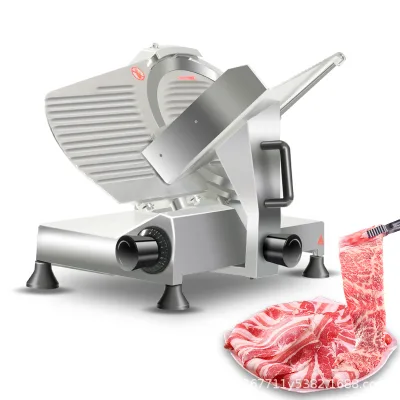
Explore 30 available options for a home kitchen meat slicer designed for commercial and residential use. Buyers can compare electric and manual models with varying automatic grades, dimensions, and customization features to find the right equipment for meat processing needs.
Key considerations
Products List




Comprehensive Sourcing Guide
Home Kitchen Meat Slicer Sourcing Guide
Selecting the right meat slicer for home or small-scale commercial use requires balancing precision, safety, and durability. The market offers a wide spectrum of options, ranging from compact manual units suitable for occasional household use to heavy-duty automatic machines designed for high-volume processing. Understanding the distinction between these categories is the first step in narrowing down your search. Buyers must evaluate whether their primary need is for thin, uniform slices for deli-style presentations or robust cutting capabilities for frozen or chilled meats, as this decision dictates the necessary motor power and blade mechanics.
This guide focuses on the critical factors that influence procurement decisions, ensuring that buyers can make informed choices based on observable product attributes and industry standards. By examining technical specifications, compliance requirements, and supplier qualifications, purchasers can mitigate risks associated with poor quality or non-compliant equipment. The following sections provide a structured approach to evaluating meat slicers, emphasizing verification steps that protect the buyer’s investment and ensure operational safety in both residential and commercial environments.
Product Scope and Observed Listing Signals
The current market landscape for meat slicers reveals a diverse range of product types, including manual, semi-automatic, and fully automatic models. Observed listings indicate that products are often categorized by their automation level, with some units labeled as "Semi-Automatic" or "Automatic," while others are strictly manual. This variation is crucial for buyers to understand, as the level of automation directly impacts the ease of use, speed of operation, and the consistency of slice thickness. For instance, automatic models like the JK-320 or JK-300AU are designed for higher throughput, whereas manual options may suffice for lower-volume home kitchens.
Listing signals also highlight significant variations in physical dimensions and packaging, which affect storage and logistics. Products are observed with standard dimensions ranging from compact sizes like 37.52528.5cm to larger industrial footprints such as 820650900mm. Packaging methods vary from simple paper boxes to robust wooden cases, indicating the fragility and weight of the units. Buyers should pay close attention to these physical attributes to ensure the slicer fits their available space and can be safely transported. The presence of features like "Adjustable" and "Anti-Slip" components further suggests that user safety and customization are key selling points in this category.
Technical Specifications to Verify
When evaluating technical specifications, the material composition of the slicer is a primary concern. Stainless steel is a common material observed in listings, offering durability and resistance to corrosion, which is essential for food safety. Buyers should verify that all food-contact surfaces are made from high-grade stainless steel to prevent contamination and ensure easy cleaning. Additionally, the power source is typically electric, with voltage specifications such as 220V being common. It is imperative to confirm that the electrical requirements of the slicer match the local power infrastructure to avoid operational issues or safety hazards.
The slicing mechanism and blade specifications are equally critical. Models like the JK-250L and MS03 demonstrate that blade size and type vary significantly across products. Buyers must verify the blade diameter and the precision of the slicing control, as these factors determine the quality of the cuts. For example, some listings highlight "High Precision Slicing Control Thickness," which is vital for achieving consistent results. Furthermore, the process capability, whether for frozen, chilled, or fresh meat, should be clearly stated. Ensuring that the slicer is rated for the specific type of meat you intend to process will prevent motor strain and blade damage.
Compliance and Safety Documentation
Safety is paramount when operating meat slicers, particularly in environments where multiple users may handle the equipment. Buyers should insist on documentation that confirms the presence of safety features such as anti-slip bases and secure blade guards. These features are often listed as special attributes but must be verified through product images or detailed specifications. Additionally, compliance with local electrical safety standards is non-negotiable. Buyers should request certificates of conformity that demonstrate the product meets regional electrical and mechanical safety regulations, ensuring that the device is safe for both home and commercial use.
Food safety compliance is another critical area that requires attention. The slicer must be designed to facilitate easy cleaning and sanitation to prevent bacterial growth. Buyers should verify that the product design allows for the disassembly of key components for thorough cleaning. Documentation should also include instructions on proper maintenance and cleaning procedures. By ensuring that the slicer meets these hygiene standards, buyers can protect their customers and maintain a safe working environment. It is advisable to review any available test reports or quality assurance documents that attest to the product’s compliance with food safety regulations.
Cost Drivers and Commercial Terms
The cost of a meat slicer is influenced by several factors, including the level of automation, material quality, and brand reputation. Automatic models, such as the JK-320, typically command higher prices due to their advanced features and higher throughput capabilities. In contrast, manual or semi-automatic units may be more affordable but require more manual effort. Buyers should consider their volume requirements and budget constraints to determine the most cost-effective option. It is also important to note that prices can vary significantly based on the supplier and the specific configuration of the unit.
Commercial terms, such as minimum order quantity (MOQ) and packaging, also impact the overall cost. Observed MOQs range from 1 to 500 units, allowing for flexibility in purchasing. Buyers should negotiate terms that align with their inventory needs and storage capacity. Packaging options, from carton to wooden cases, affect shipping costs and the risk of damage during transit. Understanding these commercial terms helps buyers plan their procurement strategy effectively. Additionally, buyers should inquire about warranty terms and after-sales support, as these factors can reduce long-term ownership costs.
Supplier Qualification and Quality Control
Selecting a reliable supplier is crucial for ensuring the quality and consistency of the meat slicer. Buyers should verify the supplier’s manufacturing capabilities and quality control processes. Suppliers located in regions like Anhui and Shandong, China, are common sources for these products. It is important to assess the supplier’s reputation and track record in the industry. Buyers can request references or case studies from previous clients to gauge the supplier’s reliability. Additionally, verifying the supplier’s certifications and adherence to international quality standards can provide assurance of product quality.
Quality control measures should be implemented throughout the production process. Buyers should inquire about the testing procedures used to ensure that each slicer meets the specified performance criteria. This includes testing the motor, blade sharpness, and overall structural integrity. Suppliers should provide detailed quality control reports for each batch of products. By establishing a robust quality control framework, buyers can minimize the risk of receiving defective units. It is also advisable to conduct pre-shipment inspections to verify that the products meet the agreed-upon specifications before they are dispatched.
Long-Term Procurement Checks
Long-term procurement success depends on the ability to maintain and support the meat slicer over its lifespan. Buyers should establish a maintenance schedule that includes regular cleaning, lubrication, and blade sharpening. Suppliers should provide comprehensive maintenance manuals and access to spare parts. Ensuring the availability of replacement parts, such as blades and motors, is essential for minimizing downtime. Buyers should also consider the total cost of ownership, including energy consumption and maintenance costs, when evaluating different models.
Continuous monitoring of supplier performance is another key aspect of long-term procurement. Buyers should regularly review supplier delivery times, product quality, and customer service responsiveness. Establishing a feedback loop with the supplier can help identify and address any issues promptly. Additionally, staying informed about industry trends and technological advancements can help buyers make informed decisions about future upgrades or replacements. By maintaining a proactive approach to procurement, buyers can ensure that their meat slicer operations remain efficient, safe, and cost-effective over time.
FAQs
What automatic grades are available for meat slicers?
Meat slicers come in semi-automatic, automatic, and manual grades depending on the model. The JK-250L is semi-automatic, while the JK-320 is fully automatic. Manual options like the MS03 are also available for specific processing needs.
Which materials are used to construct these slicers?
Most commercial meat slicers are constructed from stainless steel for durability and hygiene. This material ensures the equipment can withstand the frozen and chilled processes required for meat processing in factories and catering environments.
Can I find customized meat slicers for my business?
Customization is available for many meat slicer models to meet specific operational needs. Some units are fully customized, while others like the JK-300AU are non-customized standard models. Buyers should verify the specific customization status before ordering.
What are the typical dimensions for these meat slicers?
Dimensions vary significantly by model, ranging from compact units like 10.43 inches to large industrial machines. For instance, the JK-320 measures 575 by 465 by 415 millimeters, while the FQJ2-200-VI is much larger at 1720 by 650 by 1400 millimeters.
Where are these meat slicers manufactured?
These products originate from various locations in China, including Anhui and Shandong provinces. Some listings simply state Made in China, while others specify the exact province of origin for the manufacturing facility.
How is the packaging handled for these machines?
Packaging options include cartons, wooden cases, paper boxes, and combinations like carton plus plywood. The specific packing method depends on the model and size, ensuring safe transport for both small and heavy industrial units.